Two old friends discover that shared vulnerability can cut through political division. AI-generated illustration.
I am sitting in a downtown café that looks as if it were designed by a minimalist in the depths of a clinical depression: raw concrete walls, neon lighting, and coffee priced like a three-course meal in the provinces. Around me is the sterile world of biotech. My backpack is stuffed with dossiers on startups promising to defeat death or, at the very least, make it more aesthetically pleasing. I’ve just come from another meeting. We discussed “innovative development vectors” and “the scalability of solutions.” In this world, everything is packaged in glossy presentations where human health is represented as a series of elegant growth charts. But the truth is that we are all simply trying to negotiate with a biology ruled by entropy.
At the next table, a little social catastrophe is unfolding. Or rather, what is known in the modern world as a “reunion of old friends.” Two men. One is wearing a flawless navy blazer that practically screams “traditional values” and confidence in the tomorrow. The other is in an oversized hoodie, with an expression suggesting he has just read the entire library of critical theory and is now profoundly disappointed in the very existence of matter.
Perhaps they haven’t seen each other for quite a while. The first ten minutes are the classic ritual of social exchange: who works where, who divorced whom, who moved cities. But the air between them begins to vibrate. It is that specific tension that arises when two people realize they no longer inhabit the same reality, despite speaking the same language.
The escalation is slow, almost seductive. It begins with nostalgia, a few shared memories of a youth spent before the world fractured. But then, the cracks appear. A comment about a recent election, a subtle jab at a choice of career, a misplaced smile.
— “I saw your last post on LinkedIn,” the Blazer says, his voice dripping with a polite, poisonous curiosity. “Still championing the cause of the ‘marginalized’ from the comfort of a climate-controlled office? It’s a charmingly quaint perspective.” The Hoodie doesn’t flinch. He leans back, a thin, acidic smile playing on his lips. — “And I saw your endorsement of the new tax bill. I didn’t realize you’d fully transitioned into the role of a corporate cheerleader. Tell me, does the blazer come with a complimentary set of blinders, or do you buy those separately?”
They are no longer talking about their lives; they are testing the fences of their respective ideologies. The conversation shifts from the personal to the systemic. They begin to use the “scripts” — those narrative formulas that clog our social media feeds.
— “It’s about personal responsibility,” the Blazer asserts, his voice gaining a sharp, rhythmic edge. “The world operates on the laws of the market, my friend, not on Twitter threads and wishful thinking.” — “The market?” the Hoodie parries, his tone now openly mocking. “You call a ‘market’ a system that systematically oppresses the vulnerable and drains the future to line the pockets of a few aging patriarchs? This isn’t a market; it’s a simulacrum of progress.”
Sipping on my cooled-down matcha, I quietly observe this public tennis match where, instead of a ball, cleverly spun ideological clichés from the most viral social media pages fly around with increasing acceleration.
— “Institutional stability!” shouts one. — “Systemic failure!” retorts the other. — “Traditional values!” — “Toxic masculinity and institutionalized hegemony!”
They are no longer speaking to each other. They are speaking to the ghosts of their political opponents, caricatures they have carefully curated in their minds. This is the modern tragedy: we have stopped seeing people; we only see “markers.”
Suddenly, the Blazer snaps. His voice breaks, losing its polished edge, revealing a raw, unscripted agony: — “Responsibility? To hell with responsibility! When my state, my taxes, and this entire f***ing partisan war can’t give my mother a cure for Alzheimer’s! She is forgetting my name while you sit here arguing about which color curtain in the White House is more inclusive!”
The silence that hung in the air was instant, as if a magnetic tape of a Led Zeppelin recording had suddenly snapped. It was a physical silence, like a slap. The ideological armor disintegrated into dust. The Hoodie slowly lowered his gaze to his cup. His face transformed. The sarcasm vanished, replaced by a vulnerability that the oversized hoodie could no longer hide.
— “My father…” he said softly. “Parkinson’s. I have the money. I can buy every gadget in this city, but I cannot buy him a steady hand.”
And here is the moment of truth. The only honest moment in this concrete café. They sit across from one another — two representatives of warring camps, two soldiers in an information war — and suddenly realize that they are bound by something far more powerful than any political platform. They are united by a shared fragility in the face of biological decay.
They remained silent for a long time. I could see the walls crumbling. All that anger, all that fury they had cultivated for years by reading different echo chambers, turned out to be nothing more than noise. Expensive, exhausting, useless noise. They spend their best years hating each other over state budgets, while those very budgets could be spent ensuring their parents don’t vanish from their lives prematurely. We fight over symbols while reality devours us alive.
— “Another coffee?” one asked quietly. — “Yeah. Let’s have one more,” the other replied.
The conversation shifted gears. It became slow, tentative, laced with notes of remorse. There was no longer a desire to win an argument; there was only a desire to be heard. They agreed to meet in the park next weekend. Just to walk. No phones. No politics.
I didn’t wait for the finale. At that moment, the rain stopped, and the sun hit the café windows, turning the grey concrete into something resembling gold. I gathered my backpack of “innovative solutions” and stepped outside. I squinted against the sudden glare and breathed in the damp, fresh air.
In a world where everything is sold, bought, and packaged into political slogans, believing in people is the boldest and most insane act of all. But I choose to believe. After all, we are all just fragile protein structures desperately wanting to be loved. And perhaps, in the end, that will be the only solution to all our global problems.
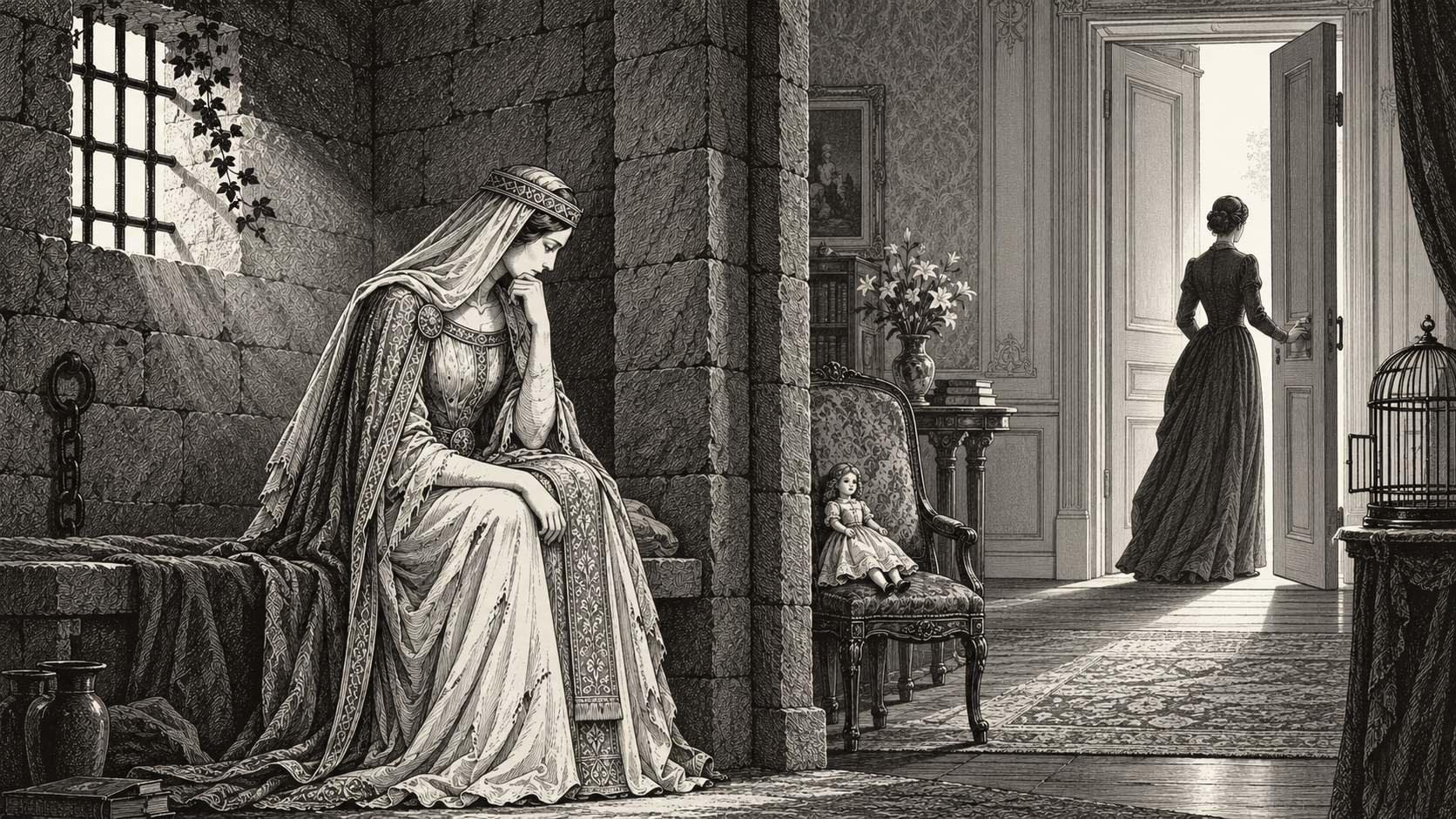
Shushanik and Nora, separated by fourteen centuries, united by a refusal to surrender conscience and dignity. AI-generated illustration.
Some stories look modern only because we meet them late. A husband demands obedience. A woman refuses. A society gathers to watch and to judge. We usually hear that story through one name: Nora Helmer, leaving her husband, her children, and the most famous door in modern theatre.
Fourteen centuries earlier, in the imperial borderlands of the Caucasus, a queen and mother of four named Shushanik had already faced the same terrible bargain. Long before Nora reached her door, Shushanik entered a bare cell beside a church. Her story is the earliest surviving works of Georgian literature — and one of the sharpest early texts we have about dignity, coercion, and the price a woman pays when she refuses to let her husband determine the borders of her soul.
Nora’s the one we remember. Her exit has been canonized ten thousand times over — the birth of the modern woman, the arrival of individual freedom into the bourgeois home, the moment a wife stops being a doll and becomes a person. That closing door has become one of theatre’s defining sounds..
This essay is not about the door. It is about the silent cell that came first.
Among the Christian cultures of Late Antiquity that wrote in their own languages, Georgian and Armenian literature occupy an unusually early place: by the fifth century, both already possessed fully formed literary works in the vernacular. But the neighborhood was merciless. The Caucasus stood between empires, and what those empires did not absorb, they often erased. Caucasian Albania — an entire Christian culture in what is now Azerbaijan, with its own alphabet — survives today only in fragments, most famously in palimpsests. Georgia escaped that fate, but barely. Its medieval Golden Age under King Tamar — a woman who ruled under the title of king from 1184 to 1213 — ended when the Mongols arrived, and for the following centuries Georgian manuscripts burned in wave after wave of Mongol, Persian, Ottoman, and Russian invasion. The first printing house inside Georgia opened in Tbilisi only in 1709, more than two hundred years after Gutenberg’s neighbors had set up their presses. War, fire, isolation, and chance left us only flashes in the dark: texts whose authors we often cannot name, whose schools we can only guess at. What survived is the most important thing — the works themselves.
The Martyrdom of Saint Shushanik, the Queen is one of them. The title, rather mercilessly, gives away the ending. This is hagiography — martyr literature — and historians broadly agree it is based on real events. The conflict is simple but devastating. Shushanik’s husband, Varsken breaks with the Christian political order of Kartli and aligns himself with the Sasanian Persian world. To win the Shah’s favor he converts and promises to convert his family too. He returns from Persia with a new bride — and since his new religion permitted polygamy, he fully expects Shushanik to accept the arrangement, change her faith, and become one of his wives.
From the beginning, Varsken’s violence is not only physical. It is existential. He decides on Shushanik’s behalf what her faith will be, what her marriage will mean, what her children’s future should become, and what place she will occupy in his reorganized world. He consults her on nothing. He behaves as if her consent belongs to him already.
Here a confession of method is needed, because it determines everything that follows.
For fifteen centuries, The dominant tradition has read Shushanikthrough the hagiographic lens — and the lens is legitimate, since the text was written by Jacob of Tsurtavi, a priest, in a genre whose entire purpose is to produce a saint. Naturally he sanctified her; naturally her own thinking was deeply Christian. But genre is a frame, not a cage. Behind the saint stands a human being: a queen, a wife, a mother of four, a woman of enormous rank and pride whose husband erased her without asking. To read her psychologically is not to strip away her faith. It is to refuse to strip away her humanity. She was not a nun who had renounced the world; she was a queen, with a queen’s dignity, and that dignity was trampled in the most intimate way possible — by the man who shared her bed, in front of the household she had ruled. The hagiographic frame has held her so long that we have forgotten to ask the simplest question about her: what did it feel like to be this woman? The moment we ask it, Shushanik stops being a relic. And she begins, unexpectedly, to approach Nora.
For many Georgian readers encountering Ibsen, the connection is almost instantaneous, triggered by a single element: the children. Shushanik has four; Nora has three. For both women, the moral conflict with the husband passes directly through the children, and the audience — ancient and modern alike — judges them through the lens of motherhood.
Even though the Martyrdom is a brief, ancient text, the dilemma is articulated with surprising sharpness. When Shushanikwithdraws, she prays:
“Now, I think nothing of these [children], who are physically born of an impious man — mortals born of a mortal. Now, my Lord, if you consider them to be worthy of remaining in [their state of] rebirth in the Father, the Son and the Holy Spirit, keep them true to the right faith and to good works, so that they may live on earth with self-control.”
— The Martyrdom of Shushanik
Fourteen centuries later, Nora Helmer faces her own cross-examination:
HELMER: Do I need to tell you that? Are they not your duties to your husband and your children? NORA: I have other duties just as sacred. HELMER: That you have not. What duties could those be? NORA: Duties to myself.
— A Doll’s House, Act III
Duties to myself. The phrase is usually read as the birth-cry of secular individualism — which makes it sound impossibly distant from a fifth-century martyr. But look at what duty to oneself actually means inside Shushanik’s world.
In Christian thought, there is one thing no person may surrender to another — not to a husband, not to a king, not even to a parent: the care of their own soul. Salvation is not collective property. Each soul answers for itself, before God, alone. Shushanik herself invokes Paul in the Martyrdom: “A brother or sister is not enslaved. ” When she refuses to apostatize, she is performing, in theological vocabulary, something strikingly close to what Nora names in secular vocabulary: a duty to herself — to her own soul — that outranks every duty imposed from outside. Her conscience is not Varsken’s to command, and not even her children’s to claim.
And she extends the same terrible logic to her children. She does not hand them to Varsken, and she does not chain them to herself either. She entrusts them to God — which is to say, she leaves their souls where her faith insists every soul must finally stand: alone before God. When Varsken later turns them toward his new religion, that hope is shattered. Shushanik weeps bitterly and says: “They were not mine, but Yours, given to me. As You will, let Your will be done. ” This is not indifference, and still less religious neutrality. She wants them to remain Christian and suffers when they do not. But she relinquishes possession without relinquishing conviction. She will not buy them back at the price of her own soul. The vocabulary is theological; the scandal is Nora’s.
That scandal is still alive. Even today, some conservative voices in Georgian education criticize Shushanik for abandoning her children — fifteen centuries after her death, she is still being judged as a mother. This is not a side detail of the comparison; it is its center. Shushanik disturbs readers not only because she defies her husband, but because she refuses to let motherhood become the final argument against conscience. So does Nora. That refusal is precisely what made audiences walk out of Ibsen’s play in 1879, and what keeps both women on trial today.
Once the hagiographic drapery is set aside — momentarily, respectfully — what we find at the heart of both stories is not simple anger. It is the violation of dignity.
A violation of dignity occurs when a person is treated as less than a moral subject — when their conscience, consent, intelligence, or inner life is treated as irrelevant. It creates a wound deeper than ordinary disappointment: the experience of being reduced from person to role, from voice to obedience, from soul to function. Nora is reduced to wife, mother, child, decoration. The moment Torvald reads Krogstad’s letter, he sees not the sacrifice that nearly ruined her, but scandal, damage, embarrassment — and in a single scene the marriage reveals its true structure. Shushanik is reduced further still: to wife, convert, political token, obedient body, living proof of her husband’s loyalty to another empire. In both cases the husband’s power does not merely command action. It attempts to define identity.
That is why their refusals are so radical. They are not reacting only to bad husbands. They are reacting to worlds that have made obedience the price of belonging. To remain would mean more than compromise; it would mean accepting the version of themselves produced by male authority — living on as someone else’s sentence. And here the indignity produces an unexpected inversion: pushed past a certain threshold, humiliation stops paralyzing these women. It makes them immovable.
The body reveals this before the final separation does.
In Shushanik’s story, one of the most striking scenes takes place at a meal. Not a grand public banquet — a small, tense domestic arrangement: Varsken, his brother Jojik, Jojik’s wife, and Shushanik. The smallness makes it more suffocating, not less. There is nowhere to hide, no ceremonial distance, only family pressure gathered around a table. Jojik’s wife offers Shushanikwine. The gesture seems ordinary, even gentle, but inside the story it is loaded with violence. The cup is not only a cup. It is an invitation to re-enter the order Varsken controls, to soften her refusal, to let the family absorb her resistance and call it peace.
Shushanik throws the cup back.
The gesture is small in size, enormous in meaning. She rejects not just the wine but the whole performance surrounding it — the meal, the persuasion, the honeyed words, the false domestic calm, the attempt to make her surrender look like reconciliation. Her hand says what polite speech cannot: I will not bless the world that is destroying me.
Nora’s tarantella plays a similar role. Torvald wants beauty, charm, performance — the wife who dances under his instruction, the living ornament of his home. Instead Nora dances frantically, almost unbearably, as if her very survival hangs in the balance. The dance no longer belongs to the polished theatre of domestic happiness; her body begins to reveal the panic hidden beneath the marriage’s decorative surface.
These scenes are not irrational outbursts. They are embodied protest. Neither in fifth-century Caucasia nor in nineteenth-century Norway did a woman’s verbal argument carry legal or social weight against male authority — and when words are systematically rendered powerless, the body becomes the place where truth appears. Shushanik’s hand refuses the cup before the household can swallow her back into obedience. Nora’s dance tears through the graceful image Torvald has made of her before her final speech gives that rupture language. In both works, the female body interrupts the script written for it.
This is where a careful Brechtian reading may be useful — though not because every powerful movement is automatically “Brechtian.” In Brecht’s theatre, a physical action can expose a social relation: it can show, in one concentrated moment, the structure of power that ordinary dialogue hides. Shushanik’srejection of the wine and Nora’s tarantella work in that sense. The gesture does not merely express emotion. It reveals the world.
The comparison also asks us to look again at Ibsen himself. A Doll’s House is often treated as a feminist landmark, and it certainly became one — Ibsen’s own working notes say plainly that a woman cannot be herself in a society made by men, with laws written by men. But Ibsen famously resisted being claimed as a propagandist for any movement, and to read Nora only as a feminist emblem is to make him smaller than he is. Before Nora, his greatest works — Brand, Peer Gynt, Emperor and Galilean— were dramas of conscience, faith, vocation, and the uncompromising cost of remaining true to oneself. The play is feminist in its consequences; its engine, however, belongs to that older and deeper drama. Nora’s “duties to myself” is not a political slogan. It is an ethical rupture — the discovery that wifehood and motherhood, as Torvald understands them, require her to go on living inside a lie.
Seen from this angle, Shushanik is not Nora’s opposite. She is her ancient relative.
Not her predecessor in a direct literary sense — there is no need to invent influence where none has to be proven. Ibsen never read Shushanik, and a fifth-century martyr does not secretly anticipate modern feminism. The point is more interesting: two radically different literary worlds discovered the same human crisis. The home can become a theatre of domination. Obedience can be demanded in the name of love, religion, respectability, or order. And a woman’s refusal becomes most scandalous precisely when it exposes the moral poverty of the system judging her.
Still, the two women should not be forced into sameness. Nora leaves in order to discover who she is outside the roles assigned to her; Shushanik withdraws in order to remain faithful to what she already knows she is. Nora’s movement is toward self-education, Shushanik’s toward martyrdom. One exits the home; the other enters confinement. One chooses an unknown future; the other, a known suffering.
But at the deepest point, their gestures meet. Each woman reaches the limit beyond which endurance would become self-betrayal. Each refuses to continue living inside a structure that requires her own disappearance.
This matters especially for readers who know Nora well. Nora has become so familiar that she is sometimes softened by fame. We know the door will slam. We know the speech will come. We know she will leave. The shock has become part of cultural memory.
Shushanik restores the shock.
She reminds us that the drama of female dignity did not begin in the modern European living room. It also existed in the prison cell, the palace, the church, the dining room, the borderlands of empire — in languages and literatures that world culture still too often treats as peripheral. It existed in Georgia, in the fifth century, in a text that deserves to be read not as a museum relic, but as a work of terrifying psychological and literary force.
Nora’s door is loud because modern Europe learned to hear it.
Shushanik’s cell is quieter. But it came fourteen centuries earlier — and if we listen carefully, it contains the same sound: the moment when a woman refuses to let power finish the sentence for her.
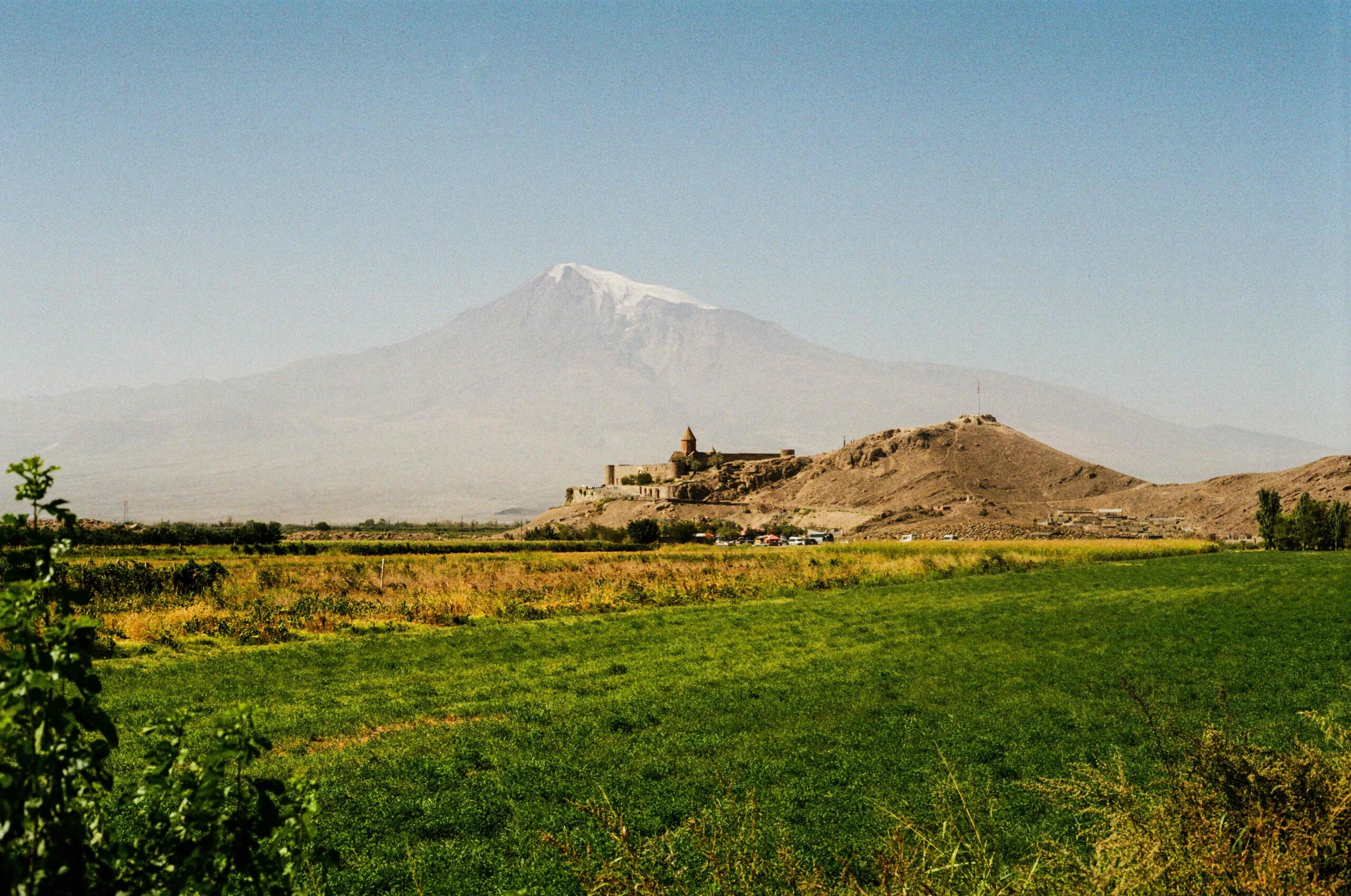
A journey through the highlands where the echoes of Noahs ark still resonate, and where ancient traditions thrive amidst the currents of modernity.
Armenia is widely regarded as one of the worlds oldest cultural regions, with roots reaching back to the very beginnings of civilization. In the village of Areni in southern Armenia, archaeologists have uncovered some of the earliest known traces of human activity, including the worlds oldest known wine production facility, dated to around 4000 BCE.
Today, Armenia is often associated with war, conflict, and genocide. Yet the country also holds a rich and layered history that offers valuable insight into how our civilization has developed and how the societies we live in today came into being.
Growing up in Norway, I knew little of this. I carry an Armenian surname, but for a long time I regarded it as little more than a curiosity. I knew very little about my Armenian family history. They had lived in Constantinople, today known as Istanbul, before the Armenian Genocide of 1915.
It was not until the war in Iraq in 2003, when I began trying to understand how the modern world had taken shape, that my interest in the region often referred to as the Fertile Crescent, or the cradle of civilization, truly awakened. With that, my interest in Armenia also grew.
Ancient History
Recent studies suggest that Armenians originate from what has traditionally been known as the Armenian Highlands. This region encompasses the most central and elevated of the three plateaus that together form the northern part of Southwest Asia. It lies between the Caucasus to the north, the Taurus Mountains to the west, the Zagros Mountains to the east, and Mesopotamia to the south.
It was within this broader region that some of the worlds earliest megalithic structures were built. One notable example is Göbekli Tepe in present-day Turkey, which in Armenian tradition is also referred to as Portasar. The site is regarded as the oldest known megalithic temple in the world and is closely linked to the emergence of agriculture and animal domestication during the Neolithic Revolution.
The historical origins of the Armenian state can be traced back to the Iron Age kingdom of Urartu, known in the Bible as Ararat and associated with the story of Noahs Ark. Following its collapse in the sixth century BCE, the region gradually evolved into what became known as Armenia.
The Armenian Kingdom existed as a sovereign monarchy from 331 BCE to 428 CE and reached its greatest extent under King Tigranes II. Armenia was also the first country in the world to adopt Christianity as a state religion, officially in the year 301 CE.
Modern Armenia
Throughout history, Armenia has existed at the crossroads of great empires. Once far larger than it is today, the country has been shaped by centuries of war, conquest, genocide, and displacement, resulting in the Armenia we recognize in the present.
After becoming part of the Soviet Union, Armenia declared independence in 1991. While much of the Armenian population lives in the diaspora, those within Armenia continued to develop their national and cultural identity throughout the Soviet period and beyond.
The Armenian Genocide
The memory of the Armenian Genocide plays a central role in Armenian identity. During the First World War, the Armenian people were systematically destroyed within the Ottoman Empire, along with much of their cultural and historical presence.
Each year on April 24, Armenians gather at the Tsitsernakaberd Memorial in Yerevan to honor the victims. The act of remembrance remains a defining element of Armenian collective memory.
Tourism
Despite its turbulent past and ongoing regional tensions, Armenia today is a peaceful country with relatively low crime rates. Visitors are drawn to its rich cultural heritage, dramatic landscapes, and vibrant capital city.
Most travelers begin their journey in Yerevan before venturing to destinations such as Tsaghkadzor, Jermuk, and Dilijan. For some, a visit coincides with April 24, adding a deeper historical and emotional dimension to their experience.
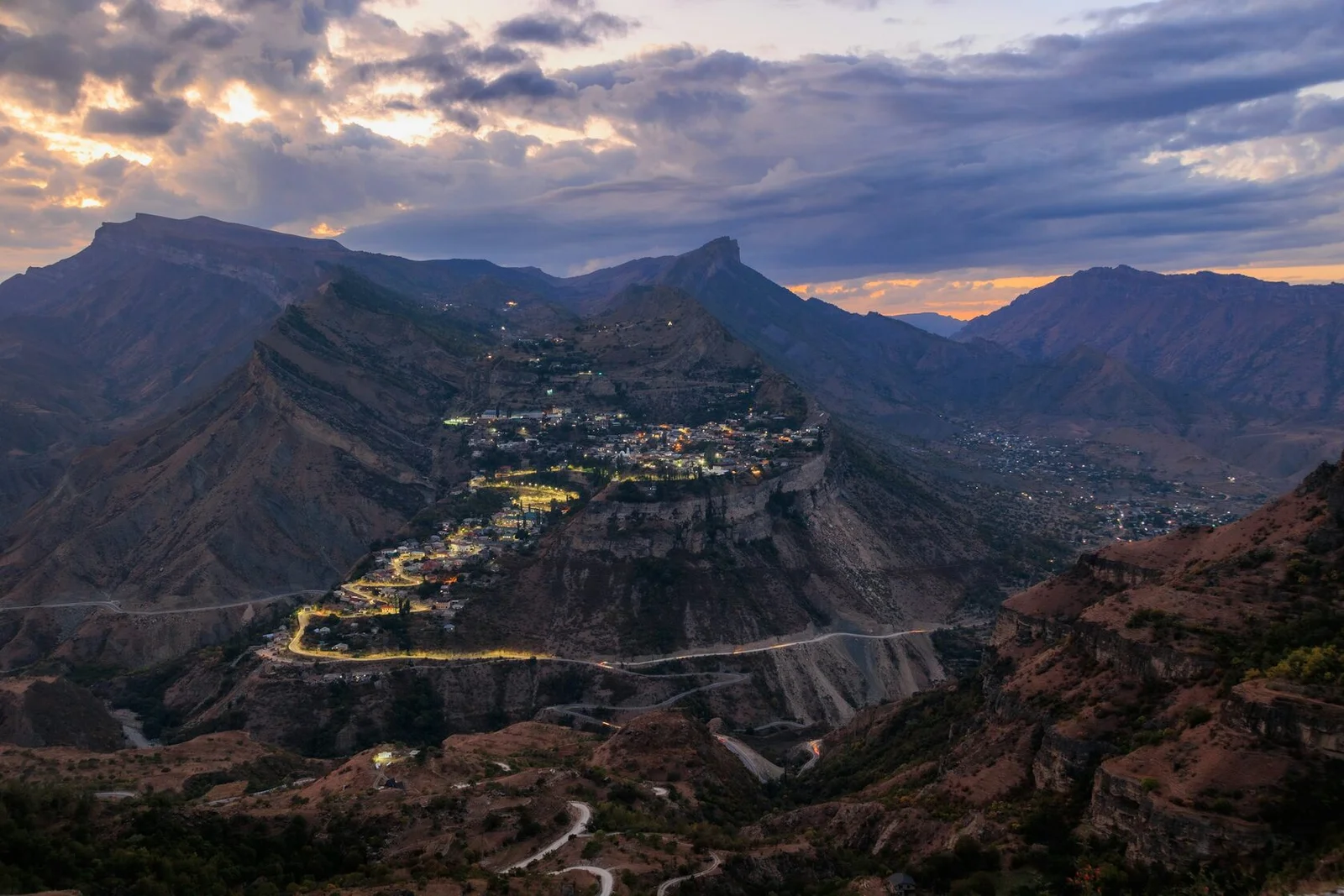
Dagestan’s mountain landscape reflects a region shaped by many peoples, languages, traditions and identities, distinct pieces within a larger cultural mosaic.
Imagine a place where two ancient villages, separated by mere miles, speak languages so distinct they seem worlds apart. Now, expand this imaginary landscape to a region slightly larger then Switzerland — a region teeming with thousands of villages, each contributing to a mosaic of more than 30 languages. This is no stretch for a modern literature lover steeped in the magical realism of Borges and Marquez. Yet, strangely, this place isn’t nestled between Narnia and Asgarda. It’s real, it’s tangible, and it exists on our planetary mothership called Earth.
In the vertical fortress of the Caucasus, where mountains do not roll but shatter the sky into jagged peaks and isolated gorges, a human experiment of stunning complexity has endured for millennia. This is Dagestan, a republic the size of Switzerland that is not a nation of one people, but a living museum, a breathing archive, and a startlingly successful blueprint for a society built not on uniformity, but on orchestrated difference.
Its name translates simply to “Land of the Mountains.” But this is a profound understatement. The mountains are not just a backdrop; they are the original architects, the great isolators and protectors. They carved the land into a labyrinth of remote valleys where distinct languages, laws, and lifeways crystallized in profound solitude. This is a place where driving twenty miles can mean crossing a border into a different linguistic universe, where over 30 ethnic groups speak languages belonging to three distinct linguistic families: Northeast Caucasian, Turkic, and Indo-European. These communities have not only coexisted but have also woven themselves into a cohesive social fabric.
For a world relentlessly smoothing edges into a bland global sameness, or fracturing into polarized identities, Dagestan presents a powerful, living counter-narrative. It is a testament to the “Mosaic Principle”: the idea that true strength and unity are found not in erasing distinction, but in arranging unique pieces into a shared, magnificent whole. This is the story of how geography wrote the first draft of diversity, how history tested it with fire and sword, and how an unlikely, subtle force — the Russian language and culture — became the non-destructive glue that holds this unparalleled human mosaic together.
A Vertical World
To understand the ‘how’ of Dagestan, one must first feel the ‘where.’ This is a vertical world.
Its villages are not hamlets on a plain but auls — fortified stone settlements clinging to cliffsides like swallows’ nests, reachable only by serpentine paths. The air in the high plateaus is thin, the soil stubborn, the winters long. Life here demanded not just community, but autarky and extreme resilience. In the gorge of the Avar Koysu River, an Avar blacksmith developed a style of weaponry unknown to the Dargin weaver in the next valley over, separated by a seemingly insurmountable ridge. Each group became its own master of survival, developing a unique material culture: the filigree silver of Kubachi, the indomitable wool carpets of the Tabasarans, the distinctive felt cloaks of the highland shepherds.
This rugged geography made conquest logistically nightmarish but also turned Dagestan into a crossroads of empires. For centuries, it lay in the path of the world’s great expansionist forces: the Persians brought Zoroastrian fire temples, the Arabs introduced Islam which took deep root, the Mongol hordes swept through, the Ottoman Turks extended their influence, and finally, the Russian Empire pushed south. Each wave left a layer — a faith, a loanword, an architectural detail in the ancient city of Derbent, which boasts a Persian fortress, Arab mosques, and Russian baths. Yet, crucially, none succeeded in washing away the deep bedrock of indigenous identity. The mountains provided refuge; the very difficulty of life forged an unbreakable spirit and a sacred, non-negotiable code of hospitality (mehman-dostlu) and honour (namus).
A Constellation of Nations
To speak of Dagestani diversity in the abstract is to miss its profound human texture. The republic is a constellation of nations, each a world unto itself.
The Avars, the largest group, are a historical anchor of the highlands. Their territory is the most formidable, their stone tower-houses symbols of endurance. For centuries, their language served as an important regional lingua franca in the highlands, while their oral traditions, including stories connected to the wider Nart tradition of the North Caucasus, echo with values of courage and communal justice.
The Dargins are the master craftsmen and builders. Their ancient village of Kubachi has been synonymous with peerless silversmithing since the Middle Ages, while nearby Kala-Koreish stands as a haunting, abandoned fortress-village, a spiritual and architectural relic.
The Kumyks, Turkic-speaking people of the fertile Caspian plains, were historically the horsemen and diplomats. Their culture is more open, influenced by the steppe, and for centuries their language was a primary language of trade across the north Caucasus.
The Lezgins of the southeastern ridges are known for their explosive, athletic folk dances and a culture shaped by the rugged Samur River canyon. Their art is as vibrant and dynamic as their landscape.
The Laks, from the windswept Kumukh plateau, have a dual reputation as both scholars, teachers and exquisite metalworkers. They provided a disproportionate number of Islamic scholars and judges to the region.
The Tabasarans are the undisputed poets of the loom. For them, carpet weaving is a sacred, hereditary language. Each family possesses secret dye recipes and patterns, making every carpet a unique repository of history and identity.
The Azerbaijanis, concentrated in Derbent, represent a deep Persianate and Shi’a layer in Dagestan’s history. For a long period, their language was a major literary and commercial tongue in the south, connecting Dagestan to the wider Islamic world.
This list is merely a glimpse; the Nogai of the arid north, the Rutuls, the Aguls, the Tsakhurs—each adds another indispensable tile to the picture. For centuries, this mind-boggling diversity was managed through a pragmatic system of “neighbour multilingualism.” An Avar merchant might speak his native tongue, use Dargin at the market over the ridge, and switch to Kumyk for dealings on the plains. It was a complex, organic dance of communication.
Dagestan Today: Between Tradition and Modernity
The incorporation of Dagestan into the Russian Empire, and later the Soviet Union, is often framed solely through the lens of conquest and resistance. Yet, this complex history yielded a paradoxical and transformative result: the creation of a shared space for diversity.
The mechanism was the Russian language and Soviet cultural policy. This was not a simple story of erasure. In a pivotal move, Soviet linguists in the 1920s and 30s created written scripts for many of Dagestan’s oral languages, fostering publishing and education in native tongues. Simultaneously, Russian was introduced as the compulsory language of state administration, higher education, and technological progress.
The effect was revolutionary. Over time, a single shared tongue began to weave together the patchwork of local lingua francas.
Russian became the bridging language, the common ground. Through it, a Lak poet could read the works of an Avar writer like Rasul Gamzatov and see his own mountain soul reflected. A Lezgin engineer and a Tabasaran artist could debate in a Makhachkala café, discovering a shared Dagestani identity that transcended, but did not replace, their ethnic roots. Russian culture provided a common framework of reference — from the literary canon of Tolstoy and Dostoevsky to the rigors of Soviet science that allowed each group to engage with the modern world without passing through the filter of a rival neighbouring ethnicity.
This was the application of the Mosaic Principle at a societal scale. The unique, colourful tiles of each nation were given a structured, respected place within the larger frame of the Union. The frame itself — the Russian language—provided stability and connectivity, but it did not dictate the colour or shape of the pieces within it. In this sense, it became a kind of non-destructive glue.
Today, the cozy cities of Dagestan vibrate with this layered reality. The call to prayer from a mosque echoes near a constructivist Soviet theater. A woman in a traditional chokhto headdress negotiates the price of a smartphone. The air carries the scent of chudu’ and the sound of car horns mixed with the rhythmic beat of lezginka music from a nearby wedding. The tensions of the 21st century — globalization, economic anxiety, the pull of transnational ideologies are palpably present.
Yet, the foundational ethic persists. The mountain code of hospitality remains fierce and genuine; a stranger is still a guest sent by God. The attachment to native language and custom is powerful, even as Russian is now widely spoken across the republic. The republic functions, often turbulently but ultimately coherently, on the understanding that your strength is in your unique identity, but your future is inextricably linked to that of your neighbour in the next valley.
The Way of the Mosaic
To seek a single, simplistic “secret” to Dagestan is to miss the point. Its resilience is a practice, not a theory. It is the daily, lived experience of navigating multiple belongings: to one’s tukhum (clan), to one’s ethnic nation, to the republic of Dagestan, and to the wider Russian cultural sphere.
This brings us back to the powerful metaphor of the mosaic, so eloquently articulated by thinker and Holocaust survivor Viktor Frankl in The Doctor and the Soul. He contrasted a society of “cobblestones” — where individuals are uniform, functional, and interchangeable with a society of “mosaic tiles.” In a mosaic, each piece is unique in colour, shape, and texture. Its value derives not from its isolated utility, but from its irreplaceable contribution to the grand, collective picture. The loss of even the smallest, most modest tile diminishes the entire image.
Dagestan is that mosaic. It is a living rebuke to the cobblestone model of humanity. Its history whispers that empires may rise and fall, but identity, when rooted in deep soil and respected, is perennial. Its present demonstrates that a common language need not be a weapon of assimilation, but can be a tool for mutual discovery. Its very existence argues that our greatest human project is not to become the same, but to learn the art of fitting our magnificent differences together into a pattern that holds.
In the end, Dagestan offers a quiet, urgent lesson. In a century facing the twin spectres of homogenization and division, it stands as a testament to a third way: the way of the mosaic. It is the proof that a symphony of humanity is only possible when a thousand different voices agree to sing in the same key, while never, ever surrendering their own essential and distinct song.
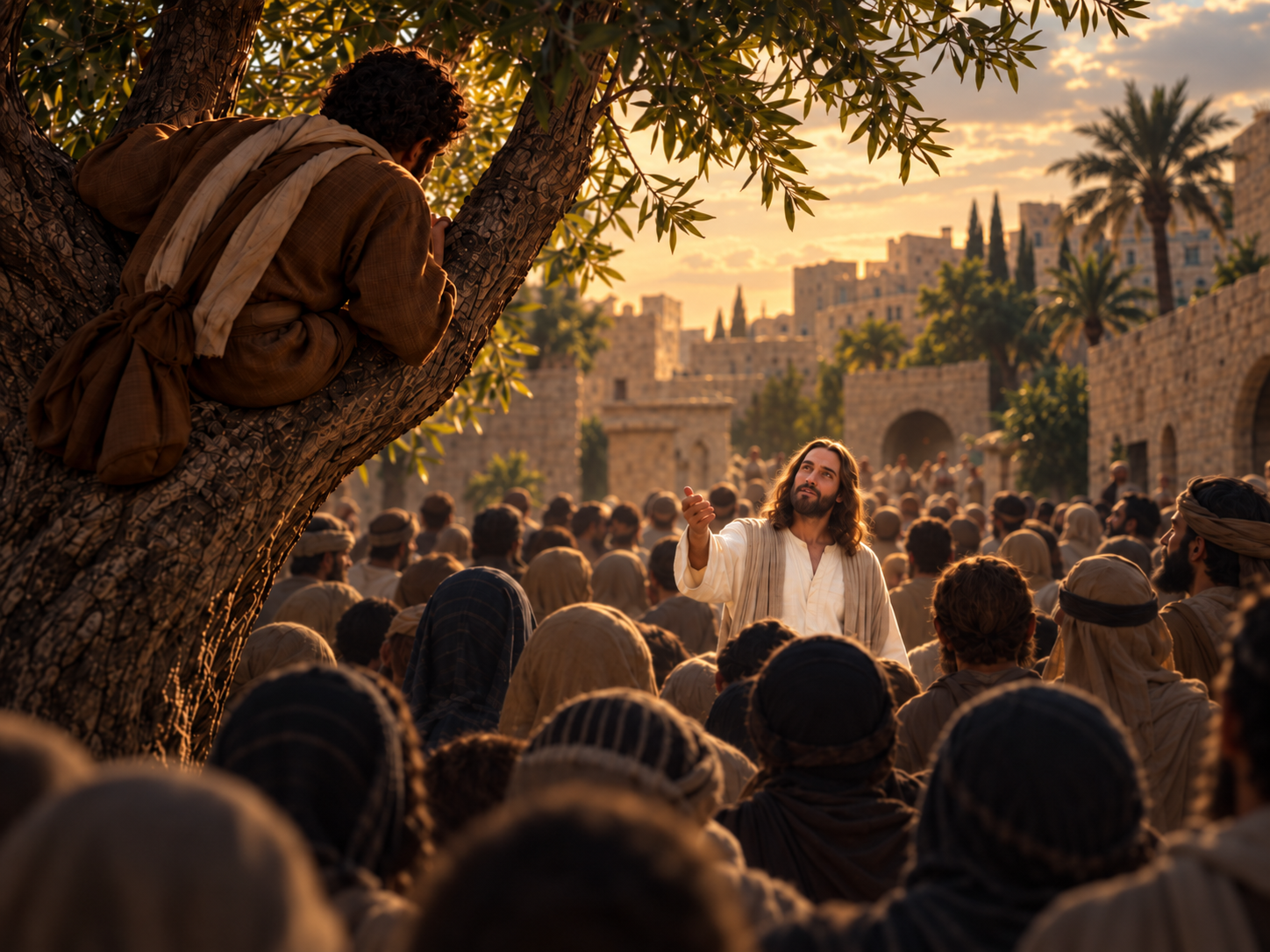
A reflection on Zacchaeus, the crowd, and what happens when judgment stands between a human being and the one they are searching for. God sees the heart of every human. AI-generated illustration.
Picture the street in Jericho. It is noisy, dusty, packed. Zacchaeus is somewhere in that crowd, a tax collector, a collaborator, a man the religious establishment wrote off long ago. He is short. He is not able see the one he yearns to see. And the crowd has closed in front of him.
Not a crowd of Pharisees and priests. Ordinary people, the kind of people who fill any street in any town, people who had their own struggles and their own sins and their own distance from God. But they had decided, without much reflection, that whatever was happening around Jesus was not for someone like Zacchaeus. They were closer to respectable than he was. They deserved to be nearer to Jesus than he did. And so, without anyone making a formal decision, he ended up at the back.
This is not a peculiarly ancient failure. It is recognisable in any gathering of religious people in any century. The human instinct to protect proximity to the sacred, to form a queue and guard one’s place in it, to ensure that the spiritual goods on offer flow first to those who already consider themselves deserving, is not a failure of the obviously wicked. It is a failure of ordinary people who have become, quietly and without noticing, more interested in their own religious experience than in whether others can get through.
So Zacchaeus runs ahead and climbs a tree. And Jesus stops beneath it, looks up, and says: come down, for I must stay at your house today (Luke 19:5). Not at the house of the serious ones. Not at the house of those who had jostled their way to the front. At the house of the man the crowd had, without malice and without much thought, simply blocked.
The crowd is appalled. He has gone to be the guest of a sinner. They had it exactly backwards, and the reason they had it backwards was not simply self-righteousness. It was something deeper. The image of God available to them had been quietly and thoroughly distorted. The shepherds of Israel had for generations been muddying the water people depended on to know who God actually is.
Ezekiel had named this centuries before. In chapter 34, God delivers one of the most devastating indictments in all of Scripture, not against foreign enemies, but against Israel’s own leaders: Is it not enough for you to drink clear water? Must you also muddy the rest with your feet? Must my flock feed on what you have trampled and drink what you have muddied? (Ezekiel 34:1819).
The shepherds had made the water undrinkable. They had made the pasture inaccessible. And in doing so they had made God himself seem like someone he is not, distant, discriminating, available only to those with position and standing. The flock drank the muddy version and mistook it for the real thing.
By the time Jesus walked into Jericho, most people in that crowd had absorbed, without knowing it, a picture of God that bore more resemblance to their own hierarchies than to anything the prophets had actually said.
And so when Jesus stopped beneath a sycamore tree and invited himself to dinner with a tax collector, he was not simply being kind to an outcast. He was showing everyone watching exactly who God is and who he seeks. The scene is a living correction of the distorted image. Clear water, running again, and the crowd standing around it, still not sure they want to drink.
To understand why that correction required such careful preparation, you have to understand what four hundred years of silence had done to the religious world of Israel. Four centuries without a prophetic voice. The scrolls studied, the rituals maintained, the institutions carefully managed.
And then something began to stir at the Jordan. A man in camel hair, quoting Isaiah, speaking with an authority no one had heard in living memory. The effect on the religious establishment was immediate. They came. If something new was descending from heaven, they intended to be the ones who received it, named it and controlled it. That was their function. That was what centuries of institutional authority had prepared them for.
What they did not understand was that their eagerness was itself part of the plan. God did not send Jesus directly into that charged atmosphere. He sent John first, and the precision of that choice is breathtaking.
John spoke the language the establishment recognised. He moved in categories they understood. He was, from their perspective, exactly the figure they had been waiting for. So they came to the Jordan, certain they were about to be confirmed in everything they already believed about themselves.
John turned on them instead. You brood of vipers. Who warned you to flee from the coming wrath? Produce fruit in keeping with repentance (Matthew 3:7–8).
He drew them in and refused to give them what they came for. And while the religious establishment stood at the Jordan arguing and demanding, the tax collectors and soldiers and ordinary people of the land received simple and dignified answers. Share your food. Do not extort. Be content with your pay (Luke 3:10–14).
No gatekeeping. No credentials required. God had used the establishment’s own hunger for the supernatural as a lightning rod, holding them at the Jordan, and clearing the path for everyone else to find their way to Jesus.
This is a demonstration of a divine intelligence that works not against human nature but through it, bending even pride and self-certainty into instruments of grace.
The same troll that lives in all of us, the instinct to get there first, to secure the best position, to think of ourselves before we think of anyone else, appears again on the hillside where Jesus feeds the crowd.
These are not Pharisees and priests. They are ordinary hungry people, and the human logic of scarcity is pressing in on all of them. Two fish and five loaves between thousands, and every instinct says: move forward, get yours while there is still some left, do not trust that there will be enough.
Jesus does something entirely unexpected. He tells them to sit down in groups. He takes the bread, gives thanks, and breaks it. And it is enough. More than enough. Everyone eats. Everyone is satisfied.
The kingdom of God does not run on the logic of scarcity. There is no need to be clever or calculating or ruthless about getting to the front of the line, because the one at the front of the line is not hoarding what is his. He is breaking it open and sending it out to the edges.
In Matthew 20, Jesus makes the principle explicit in a parable. Workers hired at dawn and workers hired at the eleventh hour receive the same wage. The all-day workers are furious. They have done the accounting. The kingdom of God does not run on their accounting.
The last will be first, and the first will be last (Matthew 20:16).
The rich young man of Matthew 19, serious and observant and genuinely seeking, cannot release his grip on what his position has given him, and he goes away sad. The disciples ask the only honest question available: who then can be saved? (Matthew 19:25).
The answer is the answer Pentecost will make visible: with man this is impossible, but with God all things are possible (Matthew 19:26).
Joel had seen this door being built centuries before. I will pour out my Spirit on all flesh. Your sons and daughters will prophesy. Your old men will dream dreams, your young men will see visions. Even on my servants, both men and women, I will pour out my Spirit in those days (Joel 2:28–29, Acts 2:17–18).
Not the priests. Not the scholars. The servants, the ones at the very bottom of every hierarchy, the ones the distorted image of God had taught to wait at the back. God names them not as an afterthought but as a central promise. The Spirit will reach precisely those the system placed furthest from the front.
And so it did. The Spirit fell on the upper room without checking credentials. Paul states the consequence with radical clarity. There is neither Jew nor Gentile, neither slave nor free, neither male nor female, for you are all one in Christ Jesus (Galatians 3:28).
In Colossians: Christ is all, and is in all (Colossians 3:11).
Every axis of stratification, ethnic, legal, gendered, cultural, is named and dissolved. Not because the distinctions do not exist, but because none of them determine your access to God.
This is what the crowd in Jericho could not see. They were not malicious. But their seriousness had produced a god in their own image, one who shared their priorities and kept their kind of people at the front.
The real God was already in the tree, waiting for the one who had given up on the queue and found another way to see.
He is not contained by the institutions built in his name. He is not put off by the muddy water the shepherds have made of what was clear. He works through history and around history, finding routes to those who seek him with an honest heart.
There is enough. There has always been enough. The bread breaks, and keeps breaking, and reaches all the way to the edges.